In the past, experienced construction companies have relied upon to take requirements and make drawings, revisions, engineering decisions and construction plans for steel projects. That’s an ongoing, crucial process. However, times are changing with tech.
AI is now starting to impact the way building concepts are explored, alternatives are assessed, information is shared amongst teams and building construction decisions are mapped to the real world.
Going from Static Design to Intelligent Exploration
The conventional way to design a steel building is to begin by discussing requirements, then sketching a design concept, discussing the changes, revising the design, and working towards producing detailed documentation. The addition of AI takes one step further.
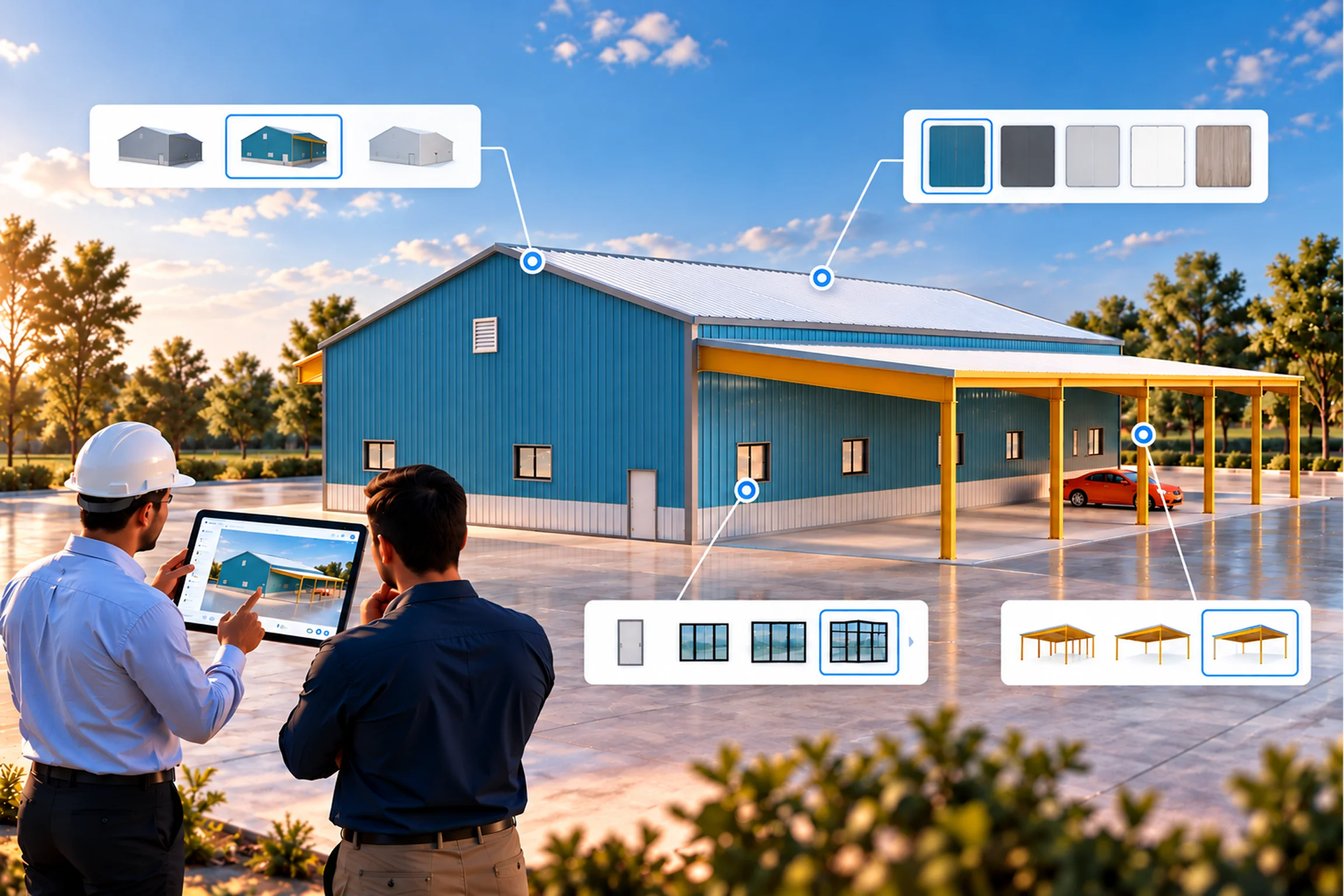
Manual exploration of the limited possibilities can be replaced by AI-assisted systems such as Instabuild360 that evaluate dimensions, spans, structural elements, material issues and project constraints, among others, can be fed into a responsive digital workflow.
Generative AI Expanding Design Possibilities
How times have changed since we first heard about generative exploration, utilizing AI to shape building design. AI building design assists teams to plan early alternatives.
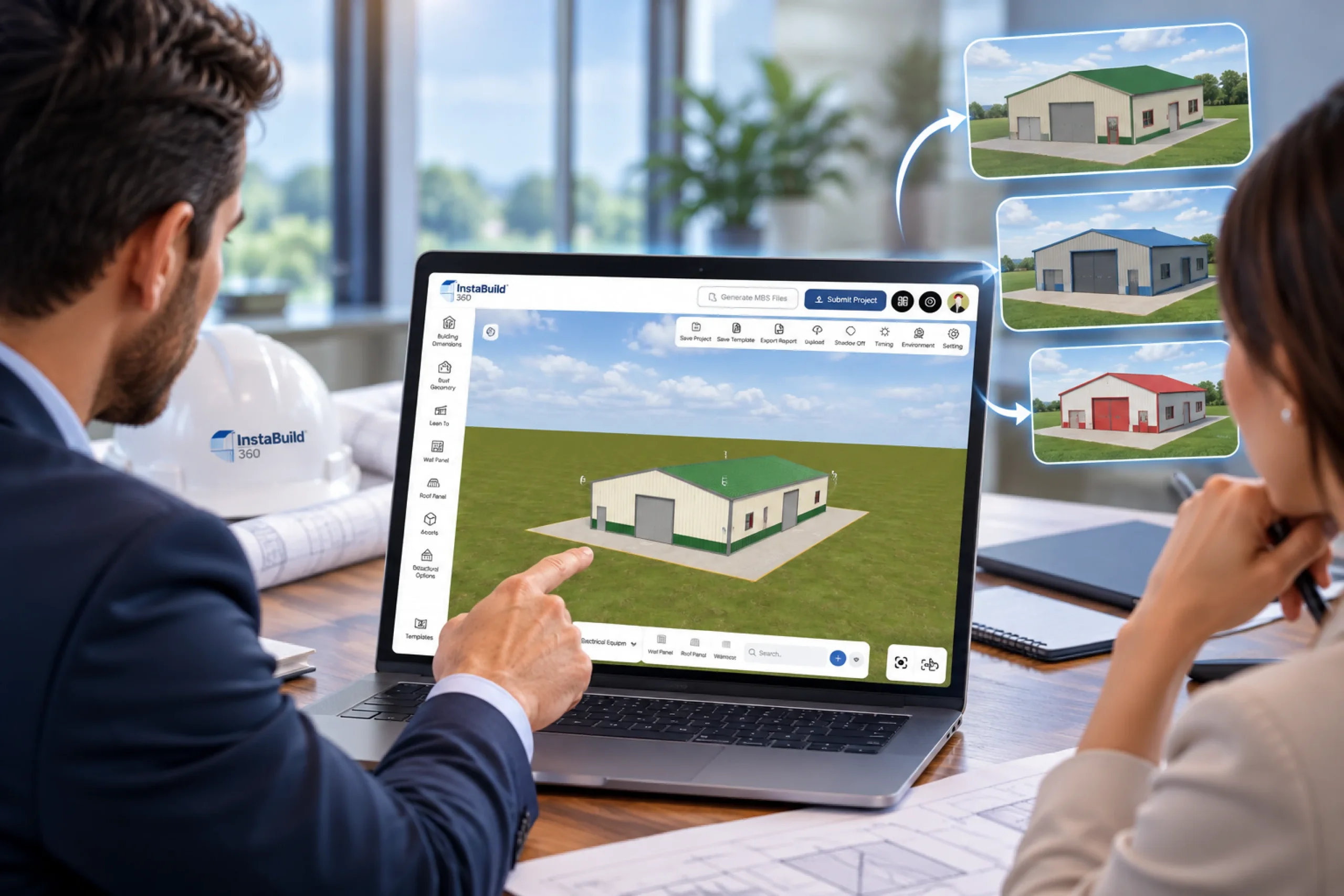
It takes specialists a lot of effort to develop and evaluate alternatives in a traditional process. Generative systems have the potential to generate several variations, given a set of constraints and goals.
That whole thing changes the role of design software. An AI-driven environment doesn’t need to record decisions that have already been taken, but instead it can be a place to focus on what decisions might be.
This is particularly pertinent to 3D metal building processes, where differences between the alternatives are easier to comprehend through visual representations.
You May Also Like: How InstaBuild360 Helps Metal Building Manufacturers Increase Sales Conversion Rates
Connecting AI With Engineering Workflows
The more information about a design exists outside of AI, the less useful it is.
Construction Activities include Architecture, Structural Engineering, Estimate, Procurement, Fabrication, Scheduling, and Field Activities. If these functions are carried out in disconnection systems, then information can get lost or be entered into the system over and over.
AI construction design can fit seamlessly into a wider digital transformation process here. AI Construction Design can be used to uncover links between project information, identify inconsistencies, structure and prioritize the information, and assess differences at an earlier stage.
Structured analysis is a portion of structural engineering that can be aided by AI. AI in structural engineering may also come up with patterns to be considered. In the field of structural engineering, AI can be employed effectively for various tasks, such as pattern recognition, analysis support, option generation, anomaly detection, and repetitive tasks.
Human review is required in the case of safety, loads, connections, structural performance, and building requirements.
Real-Time 3D Changing Design Conversation
When it’s visible, AI is more easily understood.
A client may not be able to get a technical explanation of bay spacing, framing changes, openings, etc. without an explanation of the structure or components. A responsive model in digital form gives visual feedback.
That’s where things get interesting in terms of communication, as AI can be used to enhance the steel building workflows beyond the engineering level.
A virtual 3D world with AI capabilities might be able to interpret instructions or design considerations in natural language and make changes to the building’s design, giving the user a chance to experiment with an idea without having to physically traverse each control.
This puts a link between technical information and communicating with clients.
Rather than demonstrating every change with static pictures, teams can demonstrate how a change impacts the building and discuss the impacts of the change immediately.
AI Helping with Identifying Conflicts Earlier
The structural, architectural, mechanical, electrical (and other systems) are coordinated using traditional coordination processes and determine when there are clashes. Utilizing AI powered equipment makes these checks more continuous, by analyzing project details and pinpointing relationships that ought to be thought about.
On steel projects, if there is any little bit of conflict, the consequences will result in further harm downstream as soon as the fabrication or installation process commences.
AI helps to mark potential conflicts, prioritize issues, or raise those that need more scrutiny. It can also be used to analyze constructability, to determine if problems in sequences/plans might arise in practice.
There’s another aspect in which AI construction design can help.
Assistance – not blind automation. A professional will decide if a problem has been identified and if it is of importance and what should be done.
Digital Twins Connecting Design with Jobsite
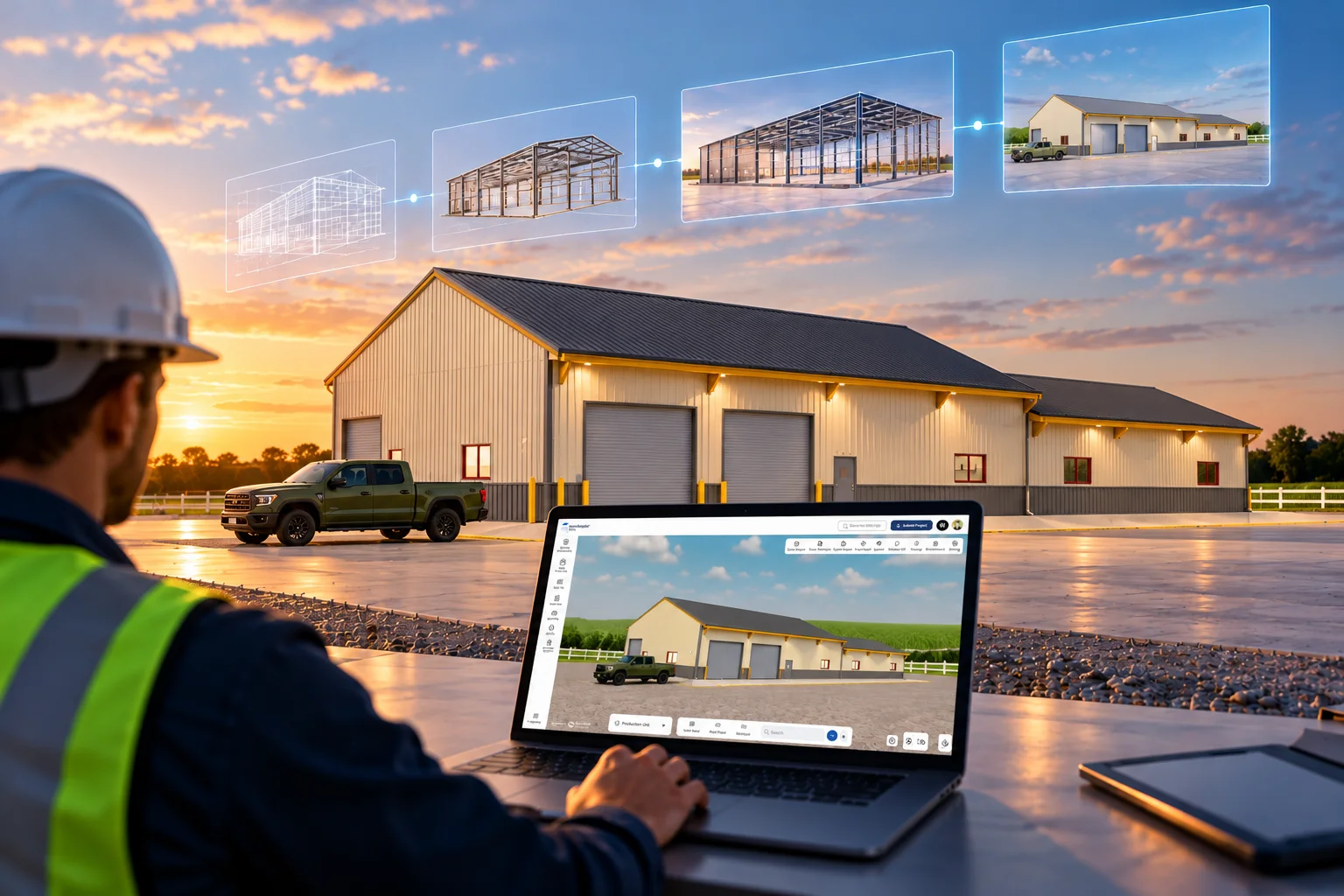
A digital twin can represent a building or construction context with an updated version, through the association of model information and actual data.
Information from sensors, drones, cameras and laser scanning can be used to inform about the actual site conditions. AI compares those conditions with the planned model and is able to detect any possible deviations.
In a digital steel building design process, this provides feedback between the model and reality of the building.
If field conditions are not as anticipated, a team can explore prior to moving forward. In more sophisticated situations, new data may affect the planning, logistics, and/or future scheduling.
This is especially true for AI in the field of structural engineering, where engineering information may not just be utilized during its design phase, but also during its lifecycle.
AI Improving Planning and Resource Coordination
Coordination is a key element in the steel construction process.
Materials must be on time. Crews must be able to reach the proper areas. Equipment should be stocked up when needed. Sequences of fabrication and erection should interrelate.
AI reviews past data and project information to pinpoint scheduling hazards and resource conflicts.
An AI system analyzes sequences for material delivery or crew allocation and points out opportunities for crewed areas that might help lower idle time or bottlenecks.
The weather is still impacting construction, as are labor shortages, site conditions, material delays and inspections. That uncertainty can’t be solved by AI, but there is a possibility of an additional analytical layer.
Digital planning is integrated with AI in the field of structural engineering, enabling technical decisions to be made in relation to the execution earlier in the project.
The Jobsite Becoming More Data-Driven
The influence of AI doesn’t end as soon as the steel arrives on the job site.
Technological solutions such as robotics and drones, computer vision, sensors, and automated inspection and progress tracking technologies are being investigated for layout, welding, material handling, inspection, and progress tracking.
AI vision systems compare the images of the site with digital models to detect deviations. Progress information can be captured on a drone, which may be challenging or inefficient to inspect by hand.
Total autonomy of a construction site is not likely to be achieved. There are unpredictable conditions at construction sites, and people are still playing a critical role.
Human-machine collaboration – people make decisions, people deal with exceptions, digital systems give information, precision and help – is a more realistic model.
Where InstaBuild360 Fits into the Broader Shift
InstaBuild360 is an AI-driven 3D engineering platform for pre-engineered buildings that features real-time visualization, engineering-aware design workflows, AI-driven interaction, multiple building types and enterprise connectivity.
Requirements can be discussed and explored within a digital format by a salesperson or project professional and communicated visually. This can add a more seamless flow between the initial discussion and design processes.
Technology cannot yet be used to supplant engineering review, code considerations, project validation, estimating, fabrication requirements, construction expertise, or any of these other items.
A Smarter Path from Idea to Building
Picture a project in which a customer’s need is transformed into a visual concept, alternatives can be quickly analyzed, engineering teams are provided with well-organized information, potential conflicts are resolved early, and fabrication and construction remain connected to a digital model.
Instead of asking, “Where can AI be applied?” in the context of steel building design, the critical question becomes: “Where can AI be applied to improve steel building design? A more relevant question is: “What are the opportunities for time, information or clarity to be lost in our current process, —and can intelligent technology fill that gap?”