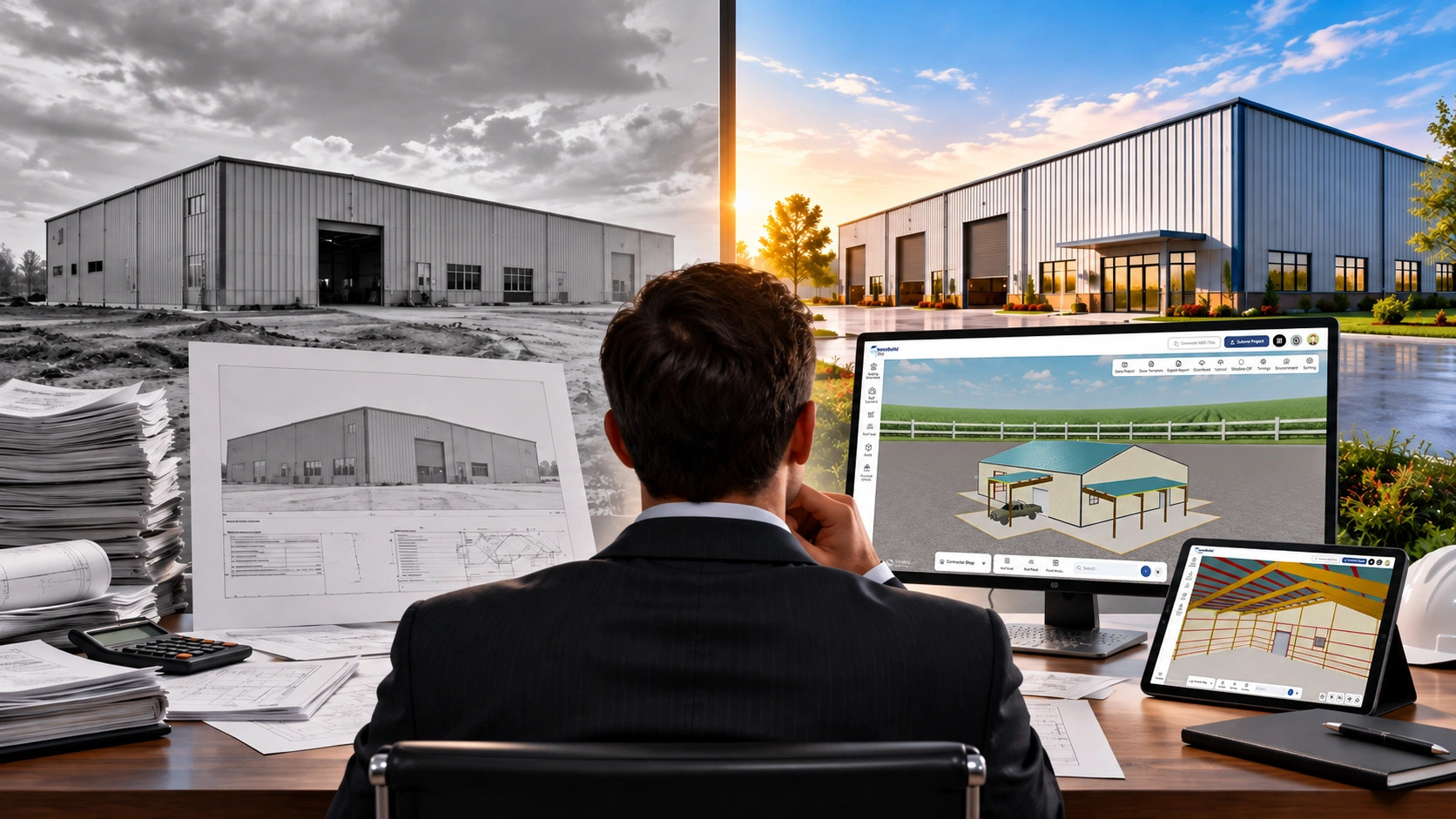
AI is changing pre-engineered metal building design by helping manufacturers turn buyer requirements into clearer, rule-guided 3D building concepts faster. In PEMB workflows, conversational AI, engineering rules, real-time 3D visualization, and connected CRM/ERP integrations can reduce design iterations, improve quote readiness, and give sales and engineering teams a more reliable project scope before detailed design begins.
Key Takeaways
- AI helps PEMB manufacturers move from early buyer requirements to clearer, more structured 3D building concepts.
- Conversational AI can guide users through dimensions, openings, components, layouts, and configuration options.
- Engineering rules improve early feasibility and reduce the risk of avoidable rework before detailed design.
- Real-time 3D visualization improves buyer confidence, accelerates approvals, and reduces clarification loops.
- InstaBuild360 connects early configuration with sales, engineering, lead capture, and enterprise workflows.
What is conversational AI in PEMB design?
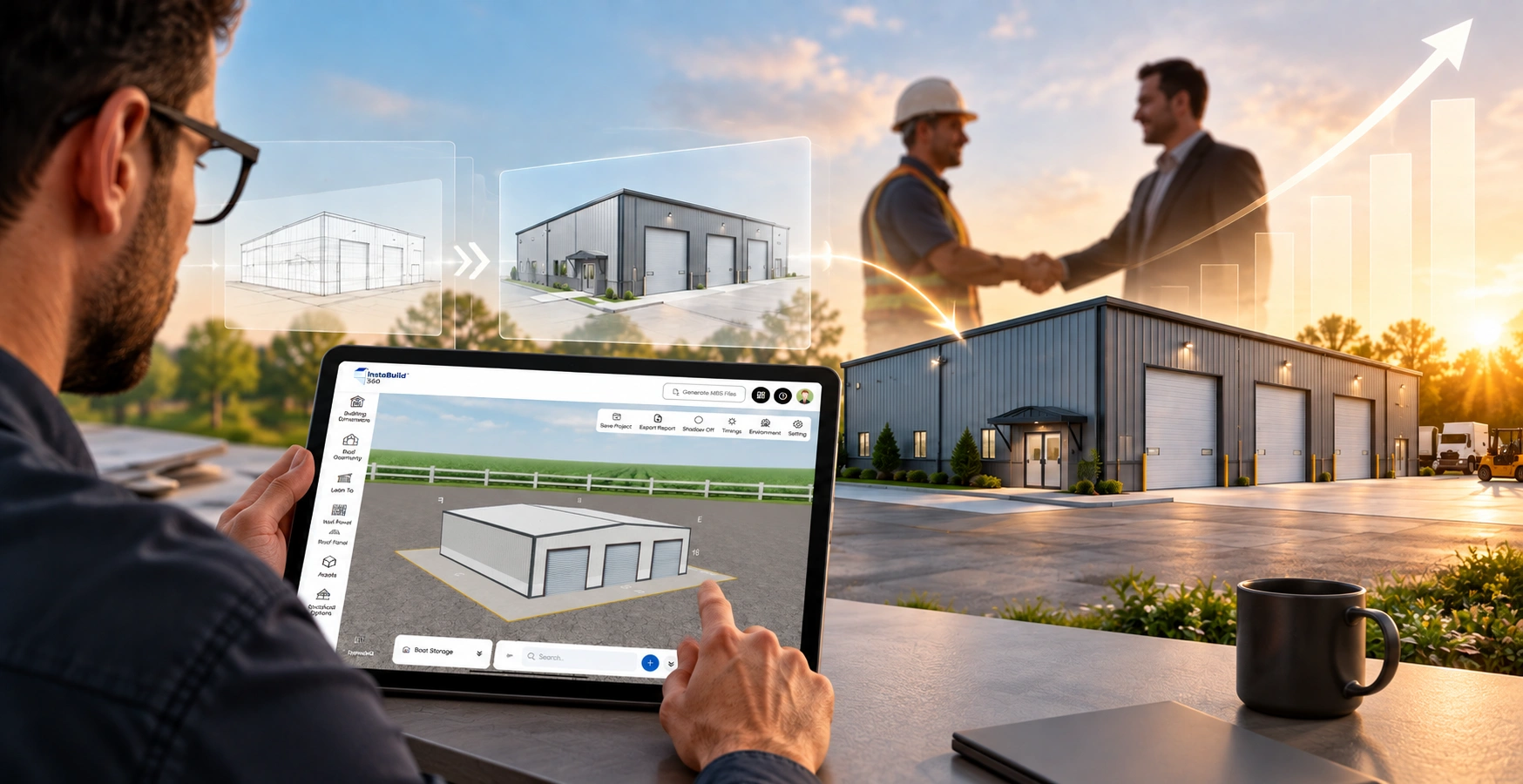
Conversational AI in PEMB design allows users to describe building requirements in natural language and receive guided configuration support inside a 3D building environment. Instead of relying only on static drawings, emails, or repeated sales-engineering conversations, users can explore dimensions, openings, components, and layout options through a more interactive workflow.

AI-assisted guidance inside InstaBuild360 helps users explore building dimensions, components, layouts, and configuration options through a conversational interface.
What is a 3D engineering platform for metal buildings?
A 3D engineering platform for metal buildings helps manufacturers, dealers, contractors, and buyers configure, visualize, and validate building concepts using real-time models, component rules, and engineering logic. For pre-engineered metal buildings, this is especially valuable because even small changes to dimensions, frames, roofs, openings, bracing, or accessories can affect quoting, approvals, and downstream execution.
Why traditional PEMB design workflows slow down sales
Traditional PEMB sales often depend on manual requirement gathering, static proposal drawings, delayed visuals, and multiple clarification loops between buyers, sales, estimating, and engineering teams. The real value of AI is not automation for its own sake. It is the ability to connect buyer intent, engineering feasibility, quote readiness, and downstream execution in one more reliable flow.
How does AI help PEMB manufacturers quote faster?
AI-assisted systems can evaluate multiple rule-based alternatives for frame geometry, bay spacing, component placement, and configuration options. In a PEMB context, every output still needs engineering governance, code compliance checks, and manufacturer-specific standards before it becomes commercially usable. The value is faster option development, cleaner quote inputs, and fewer avoidable clarification loops—not uncontrolled automated design.
|
Traditional PEMB Workflow |
AI-Assisted PEMB Workflow |
|
Manual requirement gathering |
Guided requirement capture |
|
Static drawings or delayed visuals |
Real-time 3D visualization |
|
Multiple sales-engineering clarification loops |
Cleaner early project scope |
|
Slow quote preparation |
Faster quote readiness |
|
Disconnected CRM/ERP handoff |
Connected sales-to-engineering data flow |
How does 3D visualization improve metal building sales?
Real-time 3D visualization helps buyers understand what they are approving before the project moves deeper into estimating or engineering. For metal building sales teams, this reduces uncertainty around dimensions, openings, accessories, layouts, and overall design intent. When buyers can see changes instantly, conversations become more specific, expectations become clearer, and quote inputs become more reliable.
How do engineering rules reduce design iterations?
Engineering rules help keep early configurations closer to what can realistically move forward. They can prevent incorrect placements, guide valid component combinations, and reduce the risk of requirements that later trigger major engineering rework. This does not remove the need for engineering review; it improves the quality of the conversation before detailed design begins.
How does CRM and ERP integration improve the sales-to-engineering handoff?
When configuration data connects with CRM, ERP, and construction software, sales teams do not need to manually rebuild the same information across systems. Building dimensions, selected components, customer preferences, and lead data can move more cleanly into quoting, estimating, and delivery workflows. For PEMB manufacturers, this connected handoff is where AI-assisted configuration becomes commercially valuable.
Where do BIM, robotics, and digital twins fit?
BIM, robotics, and digital twins are important parts of the broader steel construction technology landscape, but they should not distract from the immediate PEMB opportunity. For most manufacturers, the highest near-term impact comes from improving early building configuration, quote readiness, buyer visualization, and sales-to-engineering handoff. Robotics and digital twins become more useful when they are supported by cleaner model data and stronger upstream decisions.
How does InstaBuild360 support AI-assisted PEMB design?
InstaBuild360 supports AI-assisted PEMB design by bringing early building configuration, real-time 3D visualization, engineering logic, AI-assisted guidance, and enterprise integration readiness into one browser-based workflow. Instead of treating design, sales, and engineering as disconnected steps, it helps teams capture clearer buyer intent and turn it into a more structured building concept.
Built for pre-engineered metal buildings and post-frame buildings, InstaBuild360 helps manufacturers, dealers, contractors, buyers, sales teams, and engineers visualize and validate building concepts in real time. It goes beyond a basic 3D Building Design Platform by combining visualization, component configuration, engineering rules, conversational AI assistance, and connected workflow support.
What InstaBuild360 helps teams do
- Configure PEMB and hot-rolled building concepts in a browser-based 3D environment.
- Use conversational AI assistance to guide building changes and explore options.
- Work with components such as walls, roofs, trim, doors, windows, louvers, frames, canopies, bracing, vents, and other structural elements.
- Support multiple structure types, including hot roll, symmetrical frame, asymmetrical frame, and single-slope frame structures.
- Connect configuration data with CRM, ERP, lead capture, sales pipeline, and construction software workflows through enterprise integration readiness.
Why this matters for PEMB manufacturers
For PEMB manufacturers, the business impact comes from faster clarity. Buyers can see what they are asking for, sales teams can capture more structured requirements, and engineering teams receive cleaner inputs before detailed design begins. The result is fewer repeated clarifications, stronger quote readiness, and more confident movement from early interest to qualified opportunity.
The next advantage is not faster modeling. It is faster clarity.
For PEMB manufacturers, the next competitive advantage is the ability to align buyers, sales teams, and engineering teams earlier. InstaBuild360 helps turn early buyer interest into a more validated building concept through AI-assisted building configuration, real-time 3D visualization, engineering logic, and connected project data. If your team wants to reduce design iterations and improve quote readiness, InstaBuild360 gives you a clearer way to move from interest to action.
FAQs
What is the best way to reduce design iterations in PEMB sales?
How can PEMB manufacturers speed up quote generation?
Is InstaBuild360 a 3D Building Design Platform or a 3D engineering platform?
Can conversational AI help customers configure metal buildings?
What role does 3D visualization play in metal building sales?
How does InstaBuild360 connect sales and engineering teams?
InstaBuild360 connects sales and engineering teams by turning early buyer inputs into structured configuration data. With real-time visualization, engineering logic, lead capture, and integration readiness, teams can reduce repeated clarification and move cleaner information into quoting, estimating, and project workflows.