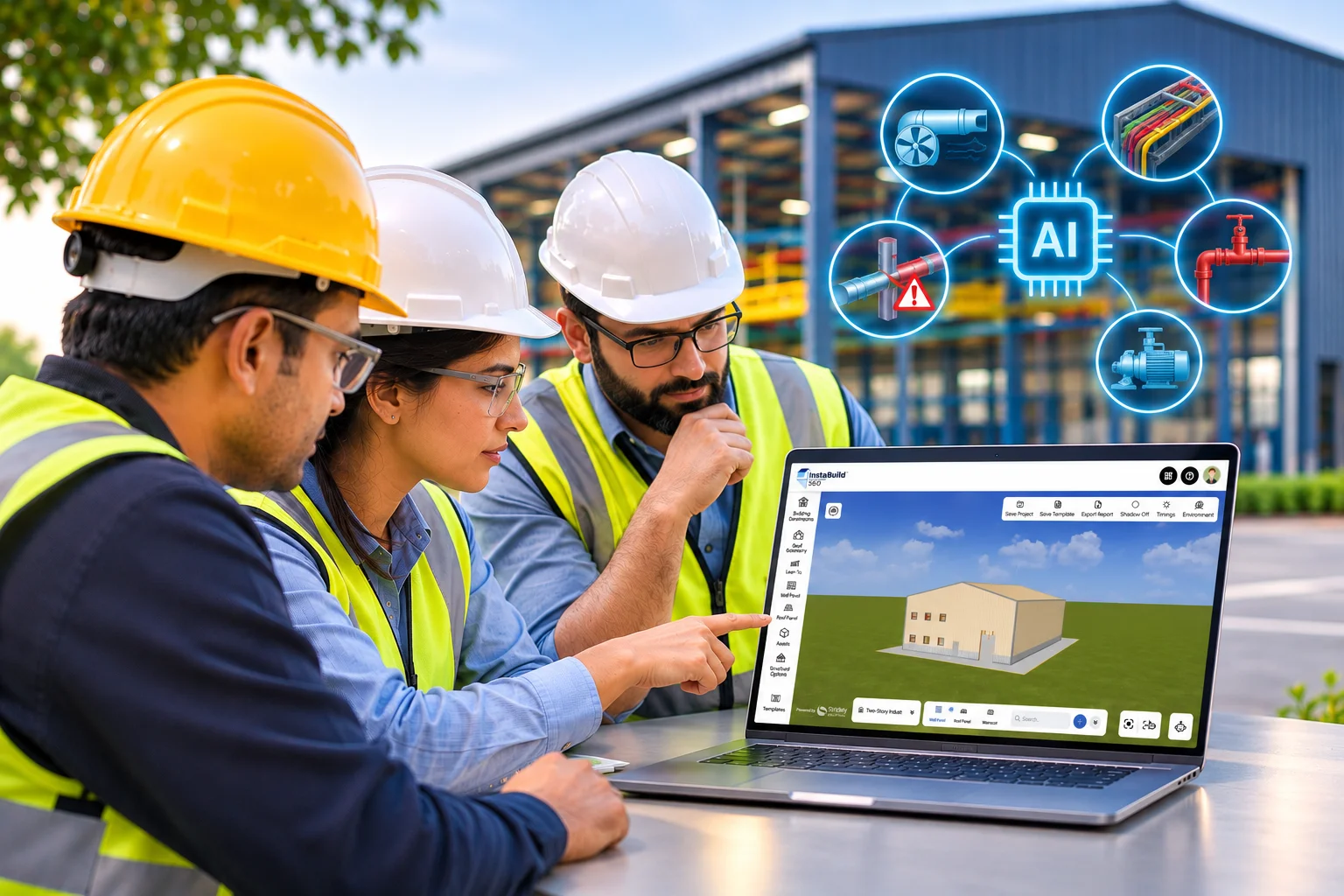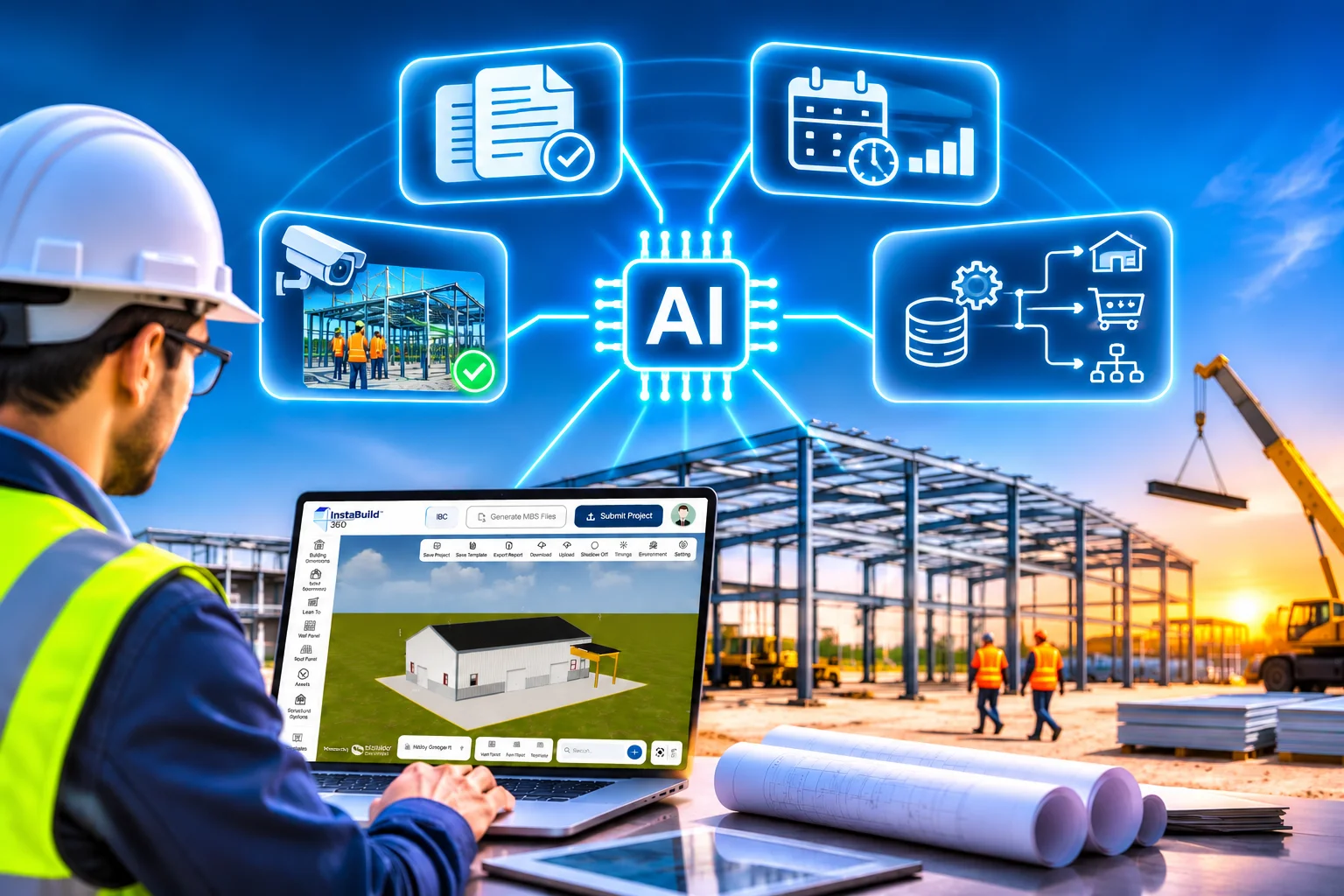
AI in metal building design is part of a broader shift in which design, fabrication, and smart technology are coming together in industrial metal buildings.
Size, structure, construction schedule, and more are no longer the only criteria used to evaluate industrial metal building. Owners must also have an idea about how the facility will facilitate the production, storage, material movement, energy consumption and maintenance with future expansion.
Artificial intelligence (AI) is opening new possibilities for AI-powered metal building design, while robotics, connected sensors, and digital modeling are creating new avenues for information analysis, repetitive task automation, and early decision-making. The use of some applications is already established in industrial production or building operations. Some are still emerging technologies such as more autonomous construction processes and self-healing structural systems, while others are specialized technologies.
Key Takeaways
- Digital twins can link digital models with operational data; however, the value of these lies in the accuracy of the data, the validation, and its ability to be integrated.
- New technologies like construction automation or self-healing materials need to be assessed based on their current level of achievement and usage.
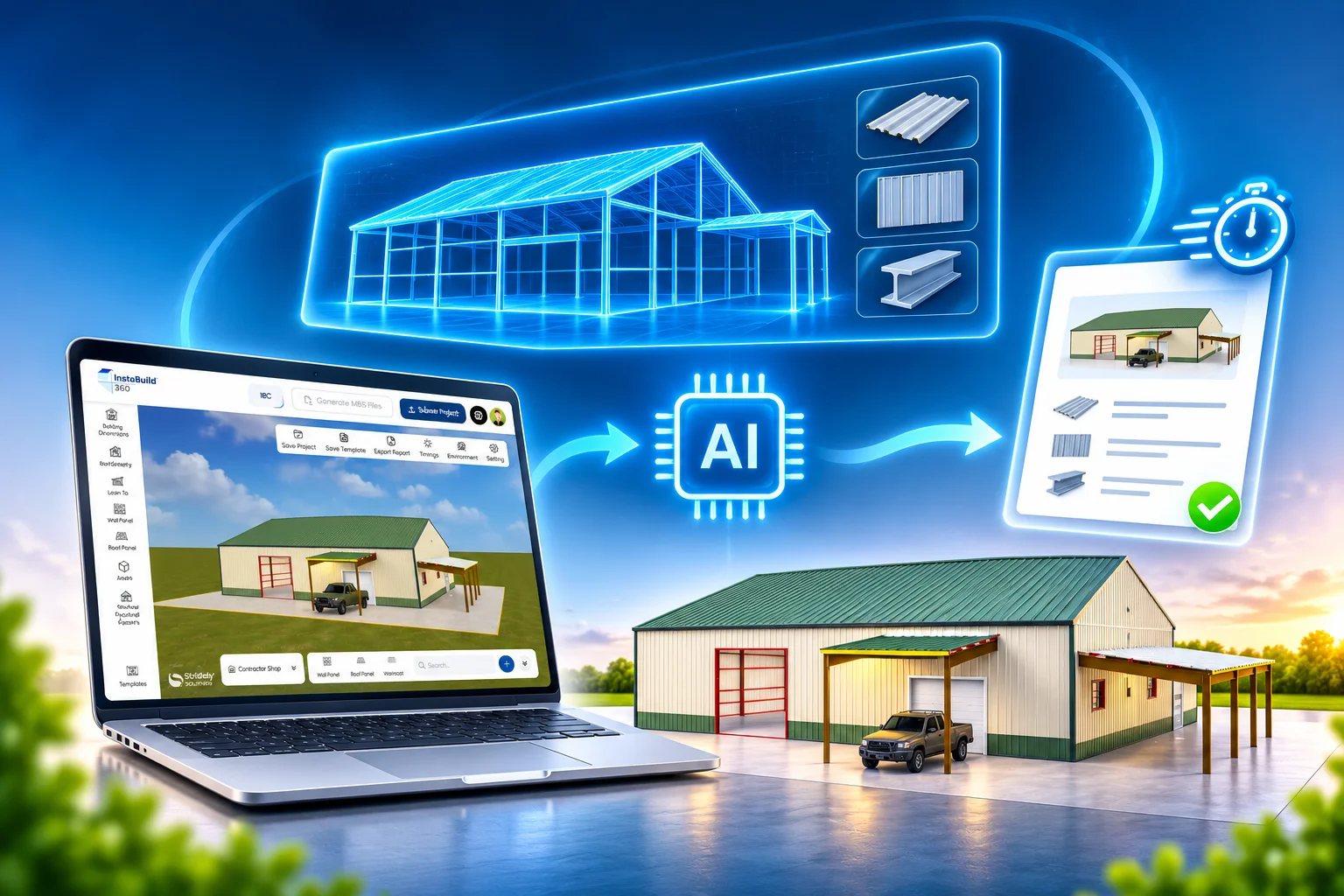
- During early discussions, InstaBuild360 can support visualization of a building concept to help a set of stakeholders reach a common understanding of a proposed building.
How AI Is Changing Industrial Metal Building Design
There are decisions to be made prior to construction with an industrial metal building project. The teams should be aware of the purpose of the facility, the space needed, site conditions, structural aspects, access, and budget considerations.
Generative design and design exploration
Teams can use metal building design software to apply generative design techniques and create or analyze alternatives against desired goals or constraints. For industrial use, these goals can relate to material use, performance, cost, or space.
Simulation and performance analysis
Simulation is one way AI in metal building design can help teams consider how a proposed system may perform under specific conditions. AI metal building software may support analysis of structural loading, thermal performance, energy use, or other engineering considerations, depending on the software and project.
Cost estimation and material optimization
AI-powered metal building design tools can use historical project data to identify cost drivers and help compare alternatives. With reliable estimating information, these tools can help teams identify variances or investigate changes that may affect a project’s budget. AI steel building design can support these comparisons, but the quality of the results depends on the information provided.
Robotic Metal Fabrication: Precision With Human Oversight
Metal fabrication is a process that consists of different work methods such as cutting, drilling, welding, handling, and assembling metal parts. Production processes with stable working routines can be appropriate for automation, for repetitive or highly controlled jobs.
There are several aspects of fabrication in which robotic systems can be used:
- Automated welding: Programmable welding machines can be used to perform repeatable welding using the proper welding procedure, component, fixture and control.
- Precision cutting: Automated Cutting Systems can be programmed to follow specific paths and are able to aid in maintaining uniformity in the production of components.
- Material handling and assembly: Robots are able to transport materials or help with repetitive manufacturing.
Smart Industrial Metal Buildings: Connecting Structures to Operations
Internet of Things (IoT) sensors
Information on factors like temperature, humidity, equipment status, energy consumption, and other measurable can be gathered by the IoT devices. This data can enable facility teams to detect abnormal conditions within the system and/or learn how building systems are working in their system.
Predictive maintenance
When there is known historical and real-time data, analytical systems can be used to look for patterns, and these patterns can be due to equipment deterioration, or to poor equipment performance in an atypical way. This can help maintenance staff in identifying maintenance inspections and finding solutions to problems to prevent bigger disruptions.
What about self-healing structures?
Self-healing materials and SHM are not the same. Under certain conditions, some materials may be designed to heal some types of damage; for other types of damage, sensor-based monitoring systems may provide a measurement of a change that necessitates inspection or maintenance.
AI in Project Management, Logistics, and Supply Chains
Predictive scheduling and risk assessment
Tools for scheduling can use project milestones, dependencies, resource availability, and historical data to identify possible conflicts. When reliable data exists, it can also inform risk assessments involving weather forecasts, supplier updates, and site constraints; AI for steel building design may help teams evaluate design-related risks alongside these project factors.
Resource allocation
Digital systems can be used by the project teams to match the expected requirements for resources against the resources available. This may be useful for problem solving, e.g. labor, equipment, sequencing, or timing issues.
Inventory and supplier monitoring
Digital inventory tools can monitor inventory, usage, purchase orders, and anticipated deliveries. Analytical systems can be used to detect irregular consumption and/or to alert possible shortages.
Digital Twins: From a Digital Model to an Operational View
A digital twin is much more than a 3-D model of a building; it is generally a digital representation linked to relevant information about a physical asset, system, or process in manufacturing and other industrial applications. AI-powered metal building design workflows may use digital models as one input, but a digital twin also depends on connected operational data.
Potential applications include:
- Monitoring equipment and facility conditions in real time.
- Making comparisons between what did and didn’t happen.
- Simulate test scenarios and tests.
- Help maintain and operate the plan.
- Testing possible changes before going through physical changes.
Sustainability and Resource Efficiency
Material efficiency
Design analysis can be used to aid in the comparison of alternatives and the analysis of materials. Production data can also be used in manufacturing to help identify any patterns of scrap or any inefficiencies in the process.
Carbon assessment
Analytical tools can be used to structure information utilized in environmental assessments such as material quantities, energy consumption, and transportation. Any carbon estimate will only be as reliable as the underlying data it is based on, both in terms of quality and the scope of the data.
Adaptability and reuse
A building that allows for future operational changes may avoid unnecessary alterations or replacement. In this context, metal building design software can help stakeholders assess space needs and possible future expansion earlier in the planning process, while AI metal building software may help compare options when suitable project data is available.
Why InstaBuild360? Bringing Building Concepts into Clearer View
With the industrial metal building industry being transformed by AI and automation, one challenge yet to be addressed is communicating with people about the building prior to furthering the project process.
InstaBuild360 helps fill this communication gap through 3D building visualization. It gives stakeholders a visual way to discuss and explore a building concept, making early conversations more concrete and helping building professionals and customers reach a shared understanding. It supports concept visualization rather than replacing engineering reviews or detailed design work.
Conclusion
Industrial metal buildings are being affected by AI and automation across design, fabrication, logistics, and building operations. AI steel building design can help teams explore alternatives, while robotic systems can support repeatable production processes; connected building controls can improve operational visibility, and analytical tools can help detect issues earlier.