A duct could be sized to provide the required air flow but could block an electrical tray. A pump can have a duty point calculation for it, but there may not be enough space for maintenance activities to be performed on it. A planned expansion may be included in an electrical design but may not have been considered at the time of the design. The individual decisions may be good in isolation and yet be a problem for the overall project.
Key Takeaways
- With BIM software and machine learning, AI can predict clashes between building systems during installation, depending on the accuracy of the models and their software, while AI-assisted building design can help teams evaluate concepts earlier.
- Once the energy modeling and design optimization are completed, engineers have the ability to evaluate the various energy system alternatives based on energy, comfort, cost, and operational needs.
- While repetitive work can be minimized with automated engineering calculations, the engineers are still responsible for performing assumptions and results of validation, including when PEMB design automation is part of a broader project workflow.
- Predictive maintenance and digital twins can link the building operation data to planning for maintenance and future design options.
- As more tasks are automated, MEP engineers must be more data literate and think in systems, especially as digital engineering for PEMB connects early building concepts with later technical work.
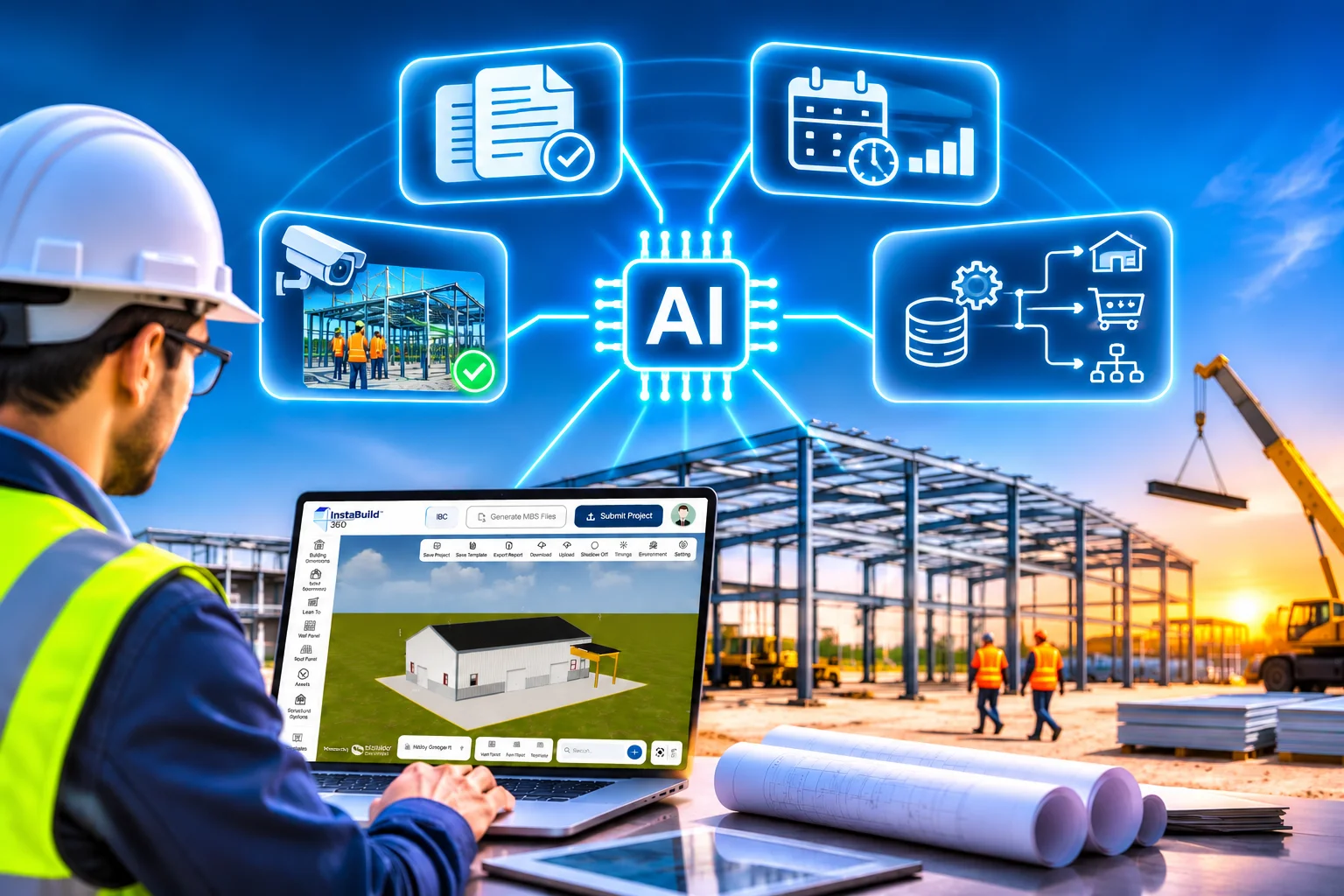
- InstaBuild360 is a tool designed to enable a simple visualization of the early stages of the metal building project, so that the stakeholders have a basic idea of what they are talking about when discussing a building concept. It is not an alternative to design or engineering validation of MEP.
Why MEP Engineering Needs a Different Approach to AI
MEP projects require coordination between several disciplines that each have their own set of calculations, design considerations, equipment needs, and documentation.
The issue is their proximity because of their mutual impact. With building geometry, equipment type, ceiling heights or service routes changing, it can be problematic across disciplines, which is why AI-assisted PEMB design can be considered as part of early building-concept discussions rather than a replacement for detailed coordination.
Automated clash detection and coordination
Traditional clash detection looks for physical intersections (or clearances) between modeled components. The tools that utilize the power of AI can also include functions for categorizing possible concerns, prioritizing reviews or examining specific relationships between systems, while automated PEMB design workflows may support related early-stage building planning tasks.
Generative MEP layouts
The use of generative design tools can be used to investigate other duct, pipe, and conduit options under specific constraints. These limitations can vary based on platform, such as space requirements, routing preferences, cost, or access for maintenance, and similar constraints can inform AI-assisted building design at the building-concept stage.
AI-Powered Energy Modeling: Evaluate Performance Before Design Decisions Become Difficult to Reverse
AI-powered workflows can support existing energy simulation, enabling engineers to explore design options, structure their input and pinpoint effective and efficient combinations of design elements, while PEMB design automation can be considered separately for relevant building-design tasks.
Predictive Maintenance and Digital Twins: Connecting Design with Building Operations
Predictive maintenance is when the information from the past and the present is combined and used to predict when maintenance of this equipment needs to be performed. The effectiveness relies on many conditions including the quality of the sensor, equipment operating experience, equipment type, and the reliability of the analysis method.
Digital twins can offer a more comprehensive context to link digital models of physical resources with the appropriate information about their condition and operation. Digital twins are a nascent field of study that includes modeling, monitoring, prediction and optimization, says the National Institute of Standards and Technology with implementation and validation challenges emphasized.
MEP Prefabrication and Robotics: Why Design Accuracy Matters Before Production
Prefabrication shifts certain construction tasks to a production work environment. The assemblies of MEP components, pipework, duct sections, and equipment modules can be produced or assembled prior to arriving at the construction site.
Accepted design data and production documents can be kept consistent thanks to connected BIM and fabrication processes. Selected drawing-generation and quantity-extraction and revision-management tasks can be aided by automation, as part of a wider approach to digital engineering for PEMB where applicable.
The New MEP Skill Set: Engineering Judgment Plus Digital Fluency
AI is reshaping engineering distribution. AI is transforming engineering distribution. There may be tasks that need to be done less manually, and reviewing, integrating and validating outputs will be more important with some repetitive tasks. MEP engineers can get ready for this change by acquiring a number of complementary skills, including the ability to assess outputs from AI-assisted PEMB design tools when working across relevant building projects.
The aim is not to be “addicted” to AI. To become more adept at technology use and to maintain the skills necessary to critique and challenge the results generated by technology.
Why Choose InstaBuild360? Make the Building Concept Easier to Understand Before Engineering Advances
MEP engineering isn’t starting on its own; it’s a component of a building project. There is a need for a common understanding of the proposed facility, its intended use, the general shape of this facility, and the spatial needs that will impact subsequent design decisions, including decisions informed by automated PEMB design workflows.
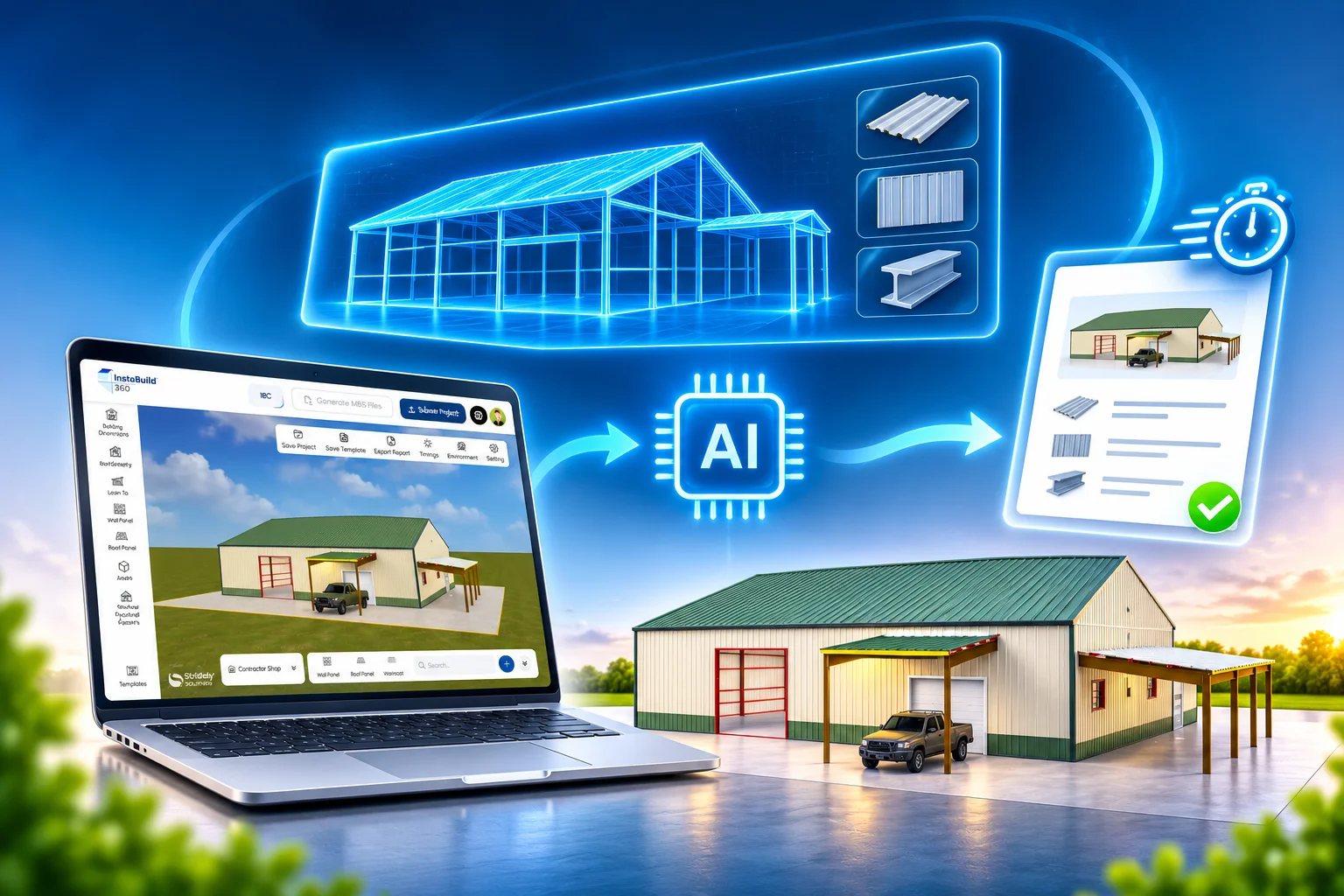
InstaBuild360 enables to make the proposed metal building idea tangible by 3D building visualization. It can help customers, sales and building professionals have a better visual reference during early discussions with the project, helping to ensure everyone has a more consistent understanding of the concept before the project moves forward, including when teams are exploring AI-assisted building design approaches.
This may help if a project team is considering the big picture of the building form or expressing visible design requirements prior to detailed engineering coordination, including as part of digital engineering for PEMB.
It is significant that this is a difference. The purpose of the InstaBuild360 in this case is to assist building visualization and alignment of early stakeholders, and not to replace the MEP design software, to run HVAC engineering load calculations, to certify code compliance or to validate engineering systems on their own.
Those tasks stay in the hands of the appropriate engineering professional(s) and special equipment.
With the building concept being more easily understood, project stakeholders have a focal point for the discussions, reviews and technical work to follow, including any later PEMB design automation activities that are appropriate to the project.
Visit InstaBuild360 to see how 3D visualization can be used to assist in early conversations about metal buildings, including concept reviews that may precede automated PEMB design and detailed engineering work.
Conclusion: The Future of MEP Engineering Depends on Better Decisions, Not Just Faster Output
There is a greater opportunity to enhance the decision-making process of engineering teams throughout the building lifecycle to identify conflicts at a more advanced stage of the project and be able to compare alternatives more effectively to maintain accurate information between the building stages, and by utilizing operational evidence, to use it to aid in the enhancement of future designs.
The success of MEP firms should be determined by the quality and reliability of the results obtained from the projects rather than the number of AI tools they have implemented.
Technology can help speed up analysis and augment options engineering has to consider. Meeting the standards of qualified professionals will also need to address the feasibility, safe use, compliance and applicability of those alternatives, whether teams use digital engineering for PEMB or other digital workflows.
The best MEP workflows will involve digital skills, engineering, as well as good engineering verification and communication between all parties to the building.